Step one
01 Colloidal · Secondary Contaminant
Color
Mostly of vegetable origin
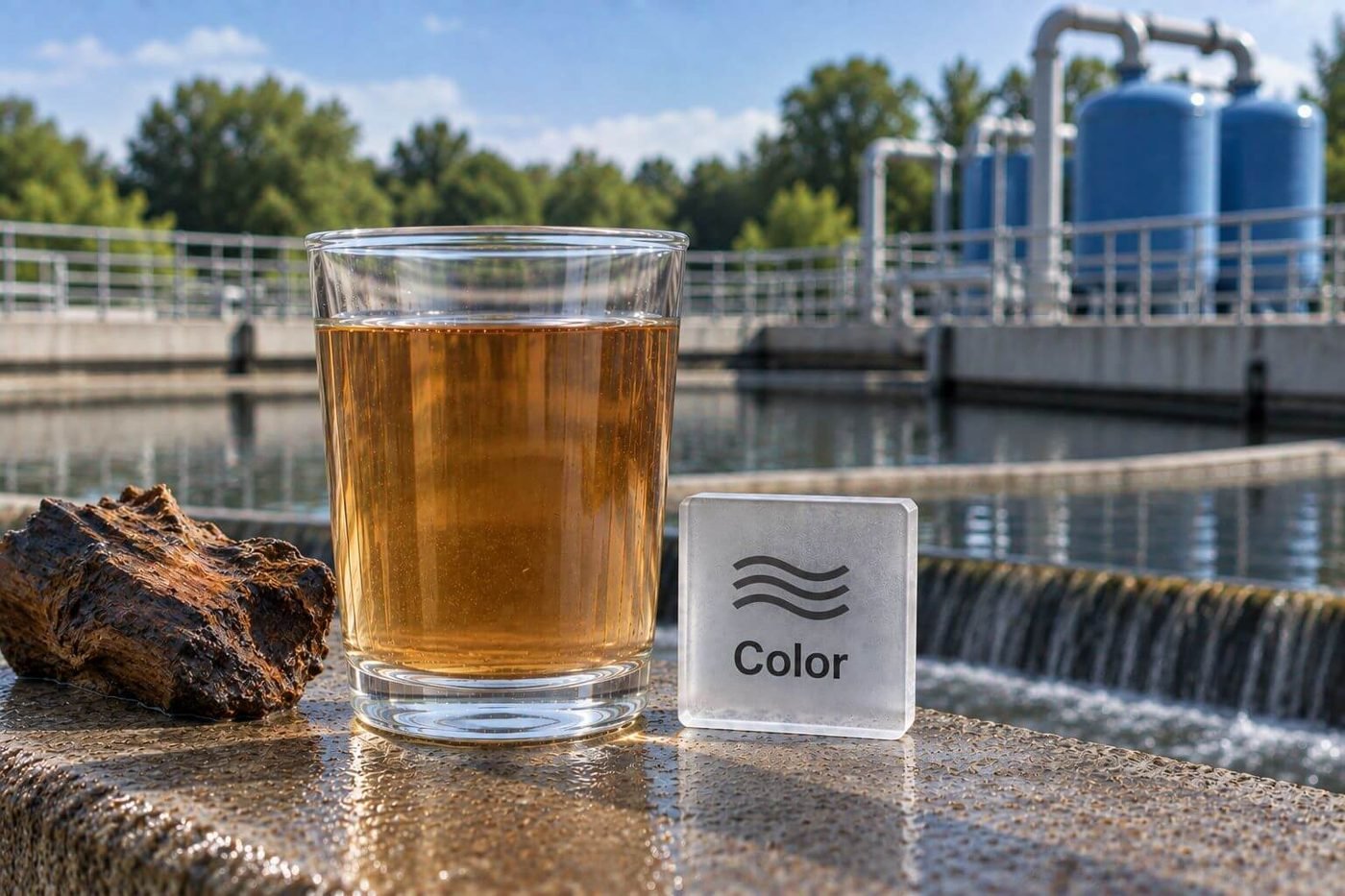
Color relates to colloidal suspensions in water, along with certain organic acids and neutral salts, but is primarily associated with contaminants of vegetable origin, often tannins and lignins (dissolved organic acids). As a result, color is typically more of an issue in surface water than groundwater, though some shallow wells can be affected. These contaminants can also raise concerns around odor and taste.
02 Measurement
An arbitrary standard scale
An arbitrary standard scale has been developed to measure color intensity in water samples, based on color produced by concentrations of potassium chloroplatinate.
03 Maximum Contaminant Level
A secondary standard
Color is regulated by the EPA under the Secondary Drinking Water Standards, with a Secondary Maximum Contaminant Limit (SMCL) of 15 color units.
15 units
Secondary maximum contaminant limit
Secondary
Regulated under the Secondary Drinking Water Standards
Surface water
More often affected than groundwater
04 Public Health
Public Health Concern
Color removal is desirable primarily for aesthetic reasons, excessive color is unappealing and can stain laundry. The EPA classifies color as a secondary contaminant, not a risk to public health.
05 WETS Treatment
Coagulation, settling and filtration
Color removal is typically accomplished through coagulation, settling, and filtration.
Step two
Settling
Step three
Filtration
06 Get Started
Solutions to Your Water Treatment Needs
Whether you need a new water treatment system installed, your current system inspected and repaired, or simply want a free quote, WETS LLC is here to help. With years of industry experience, our skilled team is trained and knowledgeable across a wide range of leading water treatment equipment and products. Our certified water purification experts are ready to find the right solution for you.
Contact Us